


If you and your spouse agree on the major terms of your split, you may be wondering whether you really need a lawyer for an uncontested divorce in Orange County. The short answer is no — California does not require you to hire an attorney to end a marriage. But “not required” is not the same as “not helpful.” Even the simplest uncontested divorce involves court forms, strict deadlines, and a final judgment that will shape your finances and your family for years to come.
This guide explains what an uncontested divorce is, how the process works in Orange County, when you can comfortably handle it yourself, and when bringing in a family law attorney protects you from costly mistakes. The goal is to help you make an informed decision about your specific situation.
What Is an Uncontested Divorce?
An uncontested divorce is one in which both spouses agree on every issue in the divorce before the case is decided by a judge. That includes property division, child custody and visitation, child support, and spousal support. Because the parties agree, there is no trial and no contested hearing — the court simply reviews the paperwork and signs off.

An uncontested divorce stands in contrast to a contested divorce, where spouses disagree on one or more issues and need the court to resolve them. The same process is available whether you were married or in a registered domestic partnership; the steps to dissolve a domestic partnership mirror those of a divorce. Some couples instead choose a legal separation, which divides finances and responsibilities without legally ending the marriage. Choosing between a divorce or legal separation is one of the first decisions you will make.
Do You Legally Need a Lawyer for an Uncontested Divorce in Orange County?
No California law requires you to hire an attorney to file for divorce. Many people complete an uncontested divorce on their own, especially when the marriage was short, there are no minor children, and there are few marital assets to divide. The court provides court forms and a self help center to assist people who represent themselves.
That said, an uncontested divorce is still a legal process with permanent consequences. A small error on your forms, an incomplete financial disclosure, or an unclear marital settlement agreement can delay your case or create problems that surface years later. Many couples who start out agreeing discover that custody and visitation or property division are more complicated than they expected. In those moments, having a family law attorney review your agreement — even if you do most of the work yourself — can be the difference between a clean divorce and an expensive correction down the road.
The Uncontested Divorce Process in Orange County, Step by Step
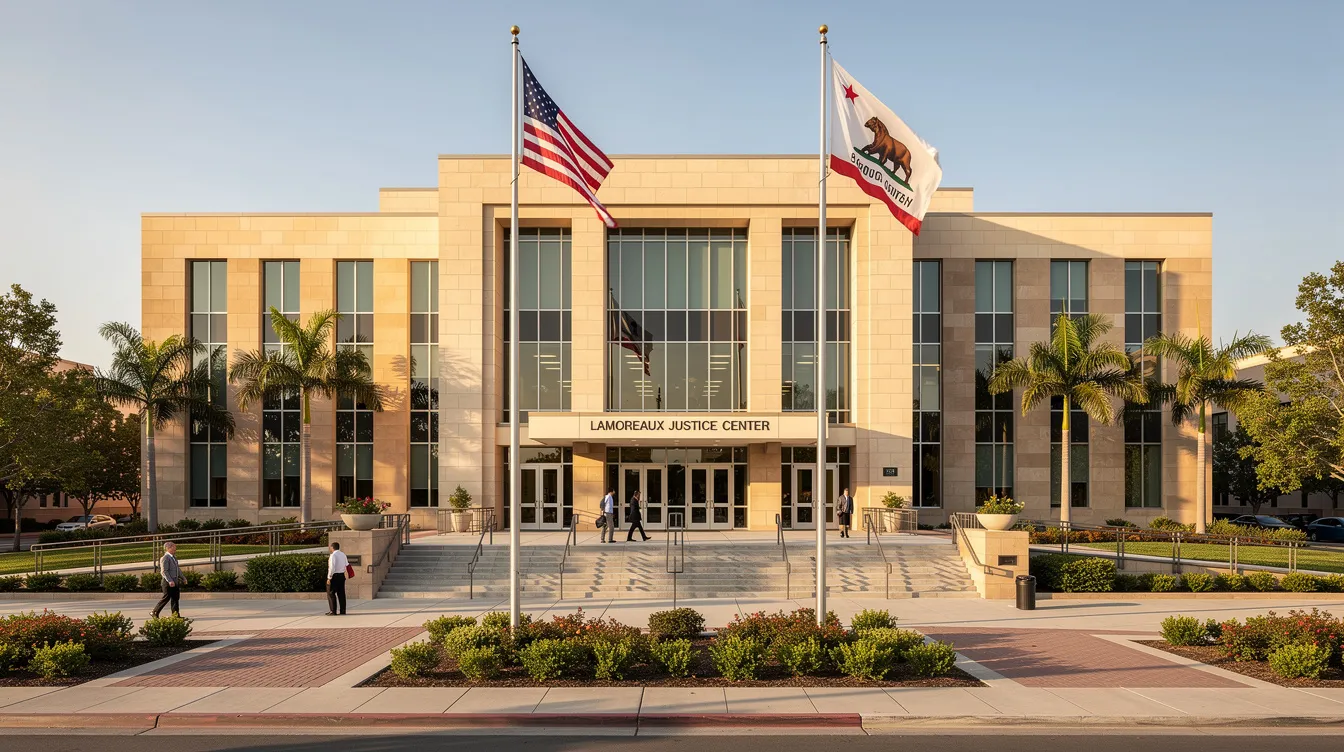
Knowing the uncontested divorce process helps you see where an attorney adds value and where you can manage on your own. In Orange County, family law cases are handled primarily at the Lamoreaux Justice Center in Orange. A typical uncontested case moves through these stages:
- File the petition. One spouse (the petitioner) completes the divorce petition and files the forms with the clerk’s office, along with the filing fee. You can pay by money order or other accepted methods, and fee waivers are available if you qualify.
- Serve the other spouse. You must personally serve your spouse or partner with the filed forms, usually through a process server or another adult who is not a party to the case. This step starts the clock on the case.
- Response or default. If both parties agree, the other spouse can either file a response and join in the agreement, or simply not respond, which allows the petitioner to request that the court enter a default. A true default with a written agreement is the most common uncontested path.
- Exchange financial information. Both spouses must exchange complete financial information through a preliminary declaration of disclosure. Skipping or rushing this step is one of the most common reasons a “simple” divorce gets rejected by the court.
- Prepare the marital settlement agreement. The heart of an uncontested case is a written marital settlement agreement covering property division, support, and any parenting issues. This document becomes part of your final court orders.
- Submit the judgment. You submit a proposed judgment and the completed forms to the court. A judge reviews everything, and if the paperwork is correct, signs the filed judgment.

If your forms are complete and accurate, an uncontested case may never require a court date or a hearing date at all. If the judge finds an error, however, your packet is returned and you start that portion again — which is exactly where many self-represented filers lose months. You can review the standard family law forms and learn more about the document filing process before you begin.
Summary Dissolution: California’s Simplest Option
California offers an even simpler path called summary dissolution. Summary dissolution is a streamlined divorce process available only to couples who meet strict legal requirements: a short marriage (generally under five years), no minor children together, limited marital assets and debts, and no request for spousal support. Couples who qualify can file a joint petition and finish with far less paperwork.
Summary dissolution is genuinely do-it-yourself friendly, and for many qualifying couples a lawyer is optional. The challenge is that few couples actually meet every requirement. If you have children, own a home, hold retirement accounts, or have been married longer than five years, summary dissolution is off the table and you are back to a standard uncontested divorce — where the stakes, and the value of legal guidance, are higher.
When You Should Hire a Family Law Attorney
An uncontested divorce can turn complicated fast. You should strongly consider hiring a family law attorney in any of these situations:
- Children are involved. Even when parents agree, a judge must confirm that the child custody and visitation plan serves the best interests of any minor children. California generally requires mediation for child custody disputes before the court decides contested custody issues. In Orange County, mediation through family court services typically takes place about 30 days after filing for custody. Temporary custody orders may be issued within about 45 days of filing when immediate parenting arrangements are needed. An attorney makes sure your parenting plan is enforceable and complete, and that child support is calculated correctly under California law. Temporary orders for support can also be requested before trial. If disputes continue over visitation issues, a child custody evaluation may be ordered; in Orange County these evaluations often take about 90 days and commonly cost between $1,500 and $12,000.
- You have real assets. A house, a business, retirement accounts, or other marital assets make property division more complex than a fill-in-the-blank form can handle.
- Spousal support is on the table. If either spouse will pay or receive spousal support, the amount and duration should be set carefully, because changing it later is difficult.
- There is a history of domestic violence. Cases involving domestic violence or a serious power imbalance are rarely truly “uncontested,” and you should have legal professionals protecting your rights.
- You are unsure of your legal rights. If you do not fully understand what you are entitled to, signing an agreement you cannot undo is a serious risk.
Not sure which camp you fall into? Our overview of whether you need a divorce lawyer walks through the question in more detail.
Uncontested Divorce vs. Contested Divorce
The difference between an uncontested case and a contested case comes down to agreement. In an uncontested divorce, the parties agree on all remaining issues, but California requires court approval for all divorce agreements before they become part of the judgment. In a contested divorce, the spouses cannot agree, and the case may involve a mandatory settlement conference, additional hearings, and ultimately a trial date if no resolution is reached.
It is also common for a case to begin as contested and become uncontested once the spouses negotiate, or to start uncontested and become contested when a disagreement surfaces over custody or property. How long resolution takes can vary depending on whether one party or the other party cooperates in finalizing the agreement and paperwork. A knowledgeable attorney helps keep a cooperative divorce on the uncontested track, which saves both time and money. Mutual agreement is the goal, and good legal guidance protects that agreement so it holds up in court.
How Long Does an Uncontested Divorce Take in California?
No matter how much you and your spouse agree, California’s mandatory six-month waiting period applies to every divorce. The court cannot finalize your divorce until at least six months after the responding spouse is served, and the date your marital status ends is still tied to the court’s final judgment and that minimum waiting period. In practice, a clean uncontested divorce in Orange County is often finalized shortly after that six-month mark, assuming your forms are accurate and the clerk’s office and judge do not return your paperwork. Cases with errors, missing financial information, or a backlog at the courthouse can take a few months longer. Exact timelines can vary depending on filing errors, court backlog, and whether both spouses cooperate promptly.
How a Pinkham Family Law Attorney Helps — Even in an Uncontested Case
You do not have to choose between “do it all yourself” and “hand over the entire case.” Many Orange County couples use an attorney in a limited role: drafting or reviewing the marital settlement agreement, confirming the forms are correct before filing, and making sure the proposed judgment will be accepted the first time. This keeps costs down while protecting you from the mistakes that turn a simple divorce into a long one.
For more than 25 years, Pinkham & Associates has guided Orange County families through both uncontested and contested divorce. Whether you want full representation or just a careful review of your agreement, we can help you finish your divorce with confidence. Contact our firm to schedule a consultation, or request a second opinion if you have already started the process and want to be sure it is on track; we are also available if you need additional assistance reviewing paperwork, evaluating settlement terms, or understanding the next steps in the process.
Frequently Asked Questions
Is an uncontested divorce available in Orange County, CA?
Yes. In Orange County, all family law documents for an uncontested divorce are filed at the Lamoreaux Justice Center. As long as both spouses agree on all issues — property, custody, and support — you can usually avoid extended family court proceedings and pursue an uncontested case rather than a contested one.
How long does an uncontested divorce in CA take?
Even an uncontested divorce is subject to California’s six-month waiting period. Most uncontested cases in Orange County are finalized shortly after six months, provided the court forms are complete and accurate and the judgment is accepted without correction.
What are the requirements for an uncontested divorce in California?
To file in California, at least one spouse must meet the residency requirement (six months in the state and three months in the county). Both spouses must complete financial disclosures and reach a written agreement on all issues. Couples with a short marriage, no children, and limited assets may also qualify for the simpler summary dissolution process.
*This article is for general informational purposes only and is not legal advice. Every divorce case is different; for guidance on your specific situation, consult a licensed California family law attorney.