



When You Need Domestic Abuse Attorneys: What to Know First
Domestic abuse attorneys are legal professionals who help victims get protection, defend the accused, and navigate the complex intersection of criminal and family law — including divorce, child custody, and restraining orders.
If you’re in Southern California and facing a domestic violence situation right now, here’s what matters most:
- Victims: You can file for a Temporary Restraining Order (TRO) at your local police station or family court — often the same day.
- Accused: Do not speak to police without an attorney. Charges can move fast and carry serious long-term consequences.
- Both sides: Domestic violence allegations — even without a conviction — can affect custody, divorce terms, housing, and employment.
- Free help is available: Pinkham & Associates, APLC offers free consultations to help you understand your options right away.
Domestic violence cases are emotionally overwhelming. They can tear families apart in ways that last for years — not just through criminal penalties, but through custody losses, restraining orders, and records that follow you everywhere.
The stakes are high. Acting quickly matters.
Whether you are seeking protection or defending yourself against allegations, having an experienced attorney in your corner from day one can make all the difference.
Understanding Domestic Violence and Legal Protections
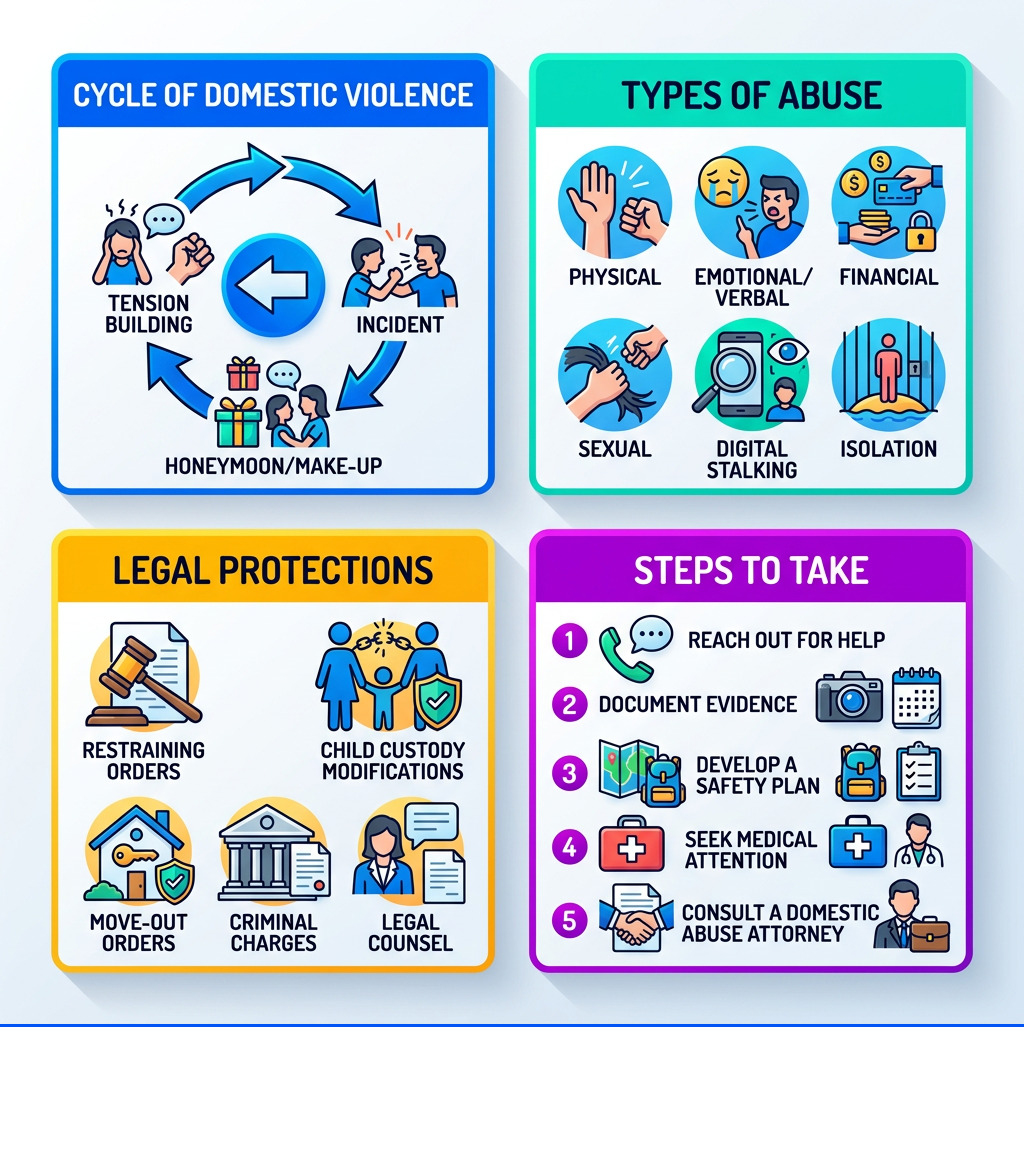
Domestic violence is a pervasive issue that extends far beyond physical altercations. In the legal realm, it encompasses a pattern of behavior used to gain or maintain power and control over an intimate partner or family member. This can include physical abuse, emotional trauma, financial control, and digital stalking.
For those residing in the Orange County area, understanding the local legal landscape is vital. While some states look only at physical strikes, California law takes a much broader view of what constitutes “abuse.” Whether you are in Irvine, Tustin, or Costa Mesa, the court’s primary goal is to ensure the safety of all parties involved, particularly children.
When navigating these waters, domestic violence services provided by experienced attorneys can help victims secure their environment and help the accused protect their future against life-altering allegations.
The Broad Scope of California’s DVPA
In California, the Domestic Violence Prevention Act (DVPA) is the primary tool used by family courts to protect individuals. One of the most unique aspects of California law is the concept of “disturbing the peace.” Under the DVPA, abuse is not limited to physical injury.
Courts have ruled that behavior destroying the mental or emotional calm of another person constitutes abuse. This can include:
- Constant, unwanted texting or calling.
- Posting private information on social media to embarrass a partner.
- Isolating a partner from friends and family.
- Coercive control over finances.
Furthermore, the DVPA applies to “dating relationships,” which California courts define as frequent, intimate associations characterized by an expectation of affection or sexual involvement. You don’t have to be married or living together to seek protection. For a deeper look at these nuances, you can read more about how California restraining orders are explained.
When domestic violence enters a family law case, the entire trajectory of the litigation changes. It is no longer just about dividing assets; it becomes a battle for safety and parental rights. Domestic abuse attorneys play a critical role here, ensuring that allegations are handled with the gravity they deserve while preventing the legal system from being used as a weapon.
The presence of a restraining order or a history of abuse can dictate the terms of a divorce, including alimony (spousal support) and the division of the family home. In California, a conviction for domestic violence can even create a legal hurdle for the abusive spouse when they try to ask for spousal support.
Impact on Child Custody and Visitation
The “best interests of the child” is the North Star for every family court judge in Orange County. If a parent is found to have committed domestic violence, California law often creates a “rebuttable presumption” that awarding sole or joint custody to that parent is detrimental to the child’s best interest.
This means:
- Custody Hurdles: The restrained party may lose the right to legal and physical custody.
- Supervised Visitation: To ensure the child’s safety, the court may order that all visits occur at a professional facility or in the presence of a court-approved monitor.
- Parental Rights: While the law generally favors children having a relationship with both parents, that right is secondary to the child’s physical and emotional safety.
Experienced domestic abuse attorneys help clients navigate these high-stakes hearings. For those looking for long-term solutions, permanent restraining orders can provide up to five years of protection and include specific custody orders.
Domestic Abuse Attorneys and Divorce Leverage
Unfortunately, because the stakes are so high, some individuals may resort to making false allegations of domestic violence to gain leverage in a divorce or custody battle. This is a “scorched earth” tactic that can result in a parent being kicked out of their home and separated from their children overnight.
Domestic abuse attorneys are trained to spot these situations. They use aggressive legal strategies to:
- Challenge False Claims: By investigating digital logs, witness statements, and medical reports to expose inconsistencies.
- Financial Restraining Orders: Preventing a spouse from draining bank accounts or hiding assets during the heat of a domestic dispute.
- Asset Protection: Ensuring that the “kick-out” order (which removes a person from the residence) is only applied when there is a genuine threat of harm.
The Process of Obtaining and Challenging Restraining Orders
The process of moving from a crisis to a legal protection order happens in stages. It is designed to be fast because safety cannot wait, but it also requires a final hearing to ensure the accused party has a chance to tell their side of the story.
| Feature | Temporary Restraining Order (TRO) | Final/Permanent Restraining Order (FRO) |
|---|---|---|
| Duration | 20 to 25 days | Up to 5 years (can be renewed) |
| Standard of Proof | Reasonable proof of a past act of abuse | Preponderance of the evidence |
| Hearing Required? | No, issued “Ex Parte” (one side only) | Yes, both parties present evidence |
| Immediate Effect | Removes firearms, can order “kick-out” | Long-term custody and support orders |
Steps to Secure Immediate Protection
If you are in immediate danger, the first step is always to call 911. Once safety is established, the legal process begins:
- Filing the Request: You (the Petitioner) file paperwork detailing the most recent incidents of abuse and any history of violence.
- Emergency Protective Order (EPO): If police respond to a call, they can request an EPO from a judge that lasts up to 7 days.
- Temporary Restraining Order (TRO): Your attorney files a request in family court. A judge usually decides on the TRO the same day or the next business day without the other person present.
- Safety Planning: This involves changing locks, notifying schools, and securing financial resources.
What Happens at the Restraining Order Hearing
Within about three weeks of receiving a TRO, the court will hold a hearing to decide if a permanent order is necessary. This is a mini-trial. You will testify, and your attorney will present evidence such as:
- Photographs of injuries or property damage.
- Screenshots of threatening texts or emails.
- Medical or police reports.
The other party (the Respondent) has the right to cross-examine the Petitioner and present their own evidence. Because the outcome can affect your record for years, it is essential to understand the specifics of restraining orders in family court.
Defending Against Charges and False Accusations
Being accused of domestic violence is a life-altering event. Even if no criminal charges are filed, a domestic violence restraining order (DVRO) appears on background checks and can lead to the loss of a job, professional licenses, and the right to own a firearm.
In California, the statute of limitations for bringing domestic violence charges is five years. This means an incident from years ago can suddenly surface during a contentious divorce.
Why You Need Experienced Domestic Abuse Attorneys for Your Case
If you are served with a restraining order, your first instinct might be to call the other person to “clear things up.” Do not do this. This is a violation of the order and can lead to immediate arrest.
Instead, you need an attorney to:
- Investigate: Look for ulterior motives, such as gaining an advantage in a custody case.
- Challenge Evidence: Are the “bruises” in the photos consistent with the story being told? Are the text messages taken out of context?
- Protect Rights: Ensure that your side of the story is heard by a judge who understands that “good people can find themselves in bad situations.”
Common Defenses and Evidence Gathering
A strong defense relies on verifiable facts. Common defenses include:
- Self-Defense: Proving that the Respondent used reasonable force to protect themselves from an initial aggressor.
- False Accusations: Demonstrating that the allegations were fabricated for leverage.
- Accidental Injury: Showing that an injury occurred without intent or “willful” behavior.
Attorneys will gather digital logs, GPS data, and witness statements to build a timeline that supports the truth.
Frequently Asked Questions about Domestic Abuse Attorneys
What should I ask potential domestic abuse attorneys during a consultation?
When seeking legal help, look for someone who specializes exclusively in family law and domestic violence. Ask about their:
- Experience: How many restraining order hearings have they handled in Orange County?
- Track Record: Do they have experience both obtaining and defending against orders?
- Approach: Do they offer a free consultation to discuss the specific facts of your case?
- Communication: How often will you receive updates on your case?
How do domestic violence charges affect my immigration or housing status?
Domestic violence is considered a “crime of moral turpitude” in immigration law. A conviction—or even a permanent restraining order in some cases—can lead to deportation or the denial of a green card or citizenship. Regarding housing, many landlords run background checks that flag DVROs, and a “kick-out” order can result in the immediate termination of your right to live in your own home.
Can a restraining order be modified or extended?
Yes. As the expiration date of a permanent order approaches, the Petitioner can file for a renewal. They do not need to prove a new act of violence; they only need to show a “reasonable apprehension” of future abuse. Conversely, if circumstances change significantly, the restrained party can motion the court to modify or terminate the order early. For more on this, explore the concept of future abuse apprehension.
Conclusion
Domestic violence cases are among the most sensitive and high-stakes matters handled in the California legal system. Whether you are fighting to reclaim your safety or defending your reputation against a false claim, the legal path you take today will echo through your life for years to come.
At Pinkham & Associates, APLC, we bring over 25 years of exclusive focus to family law and domestic violence cases in Orange County. From our offices in Irvine, Tustin, and Newport Beach, we provide the fearless advocacy and personalized strategies needed to protect your rights, your children, and your future.
Don’t navigate this crisis alone. Contact an experienced family lawyer today for a free consultation and take the first step toward safety and peace of mind.