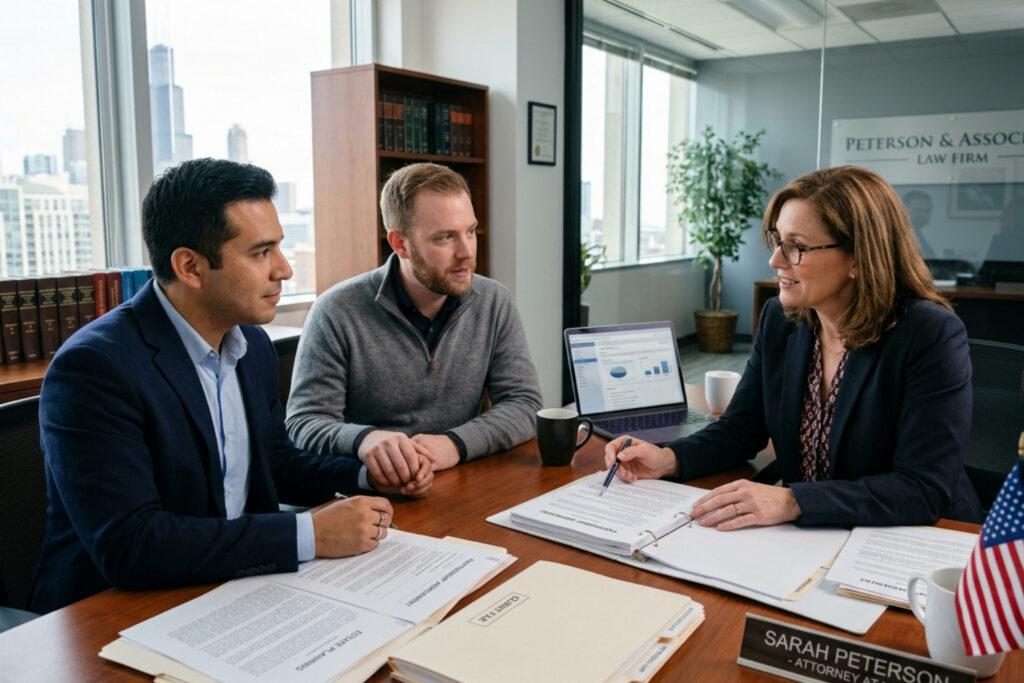



Finding the Right Divorce Attorney Starts Here
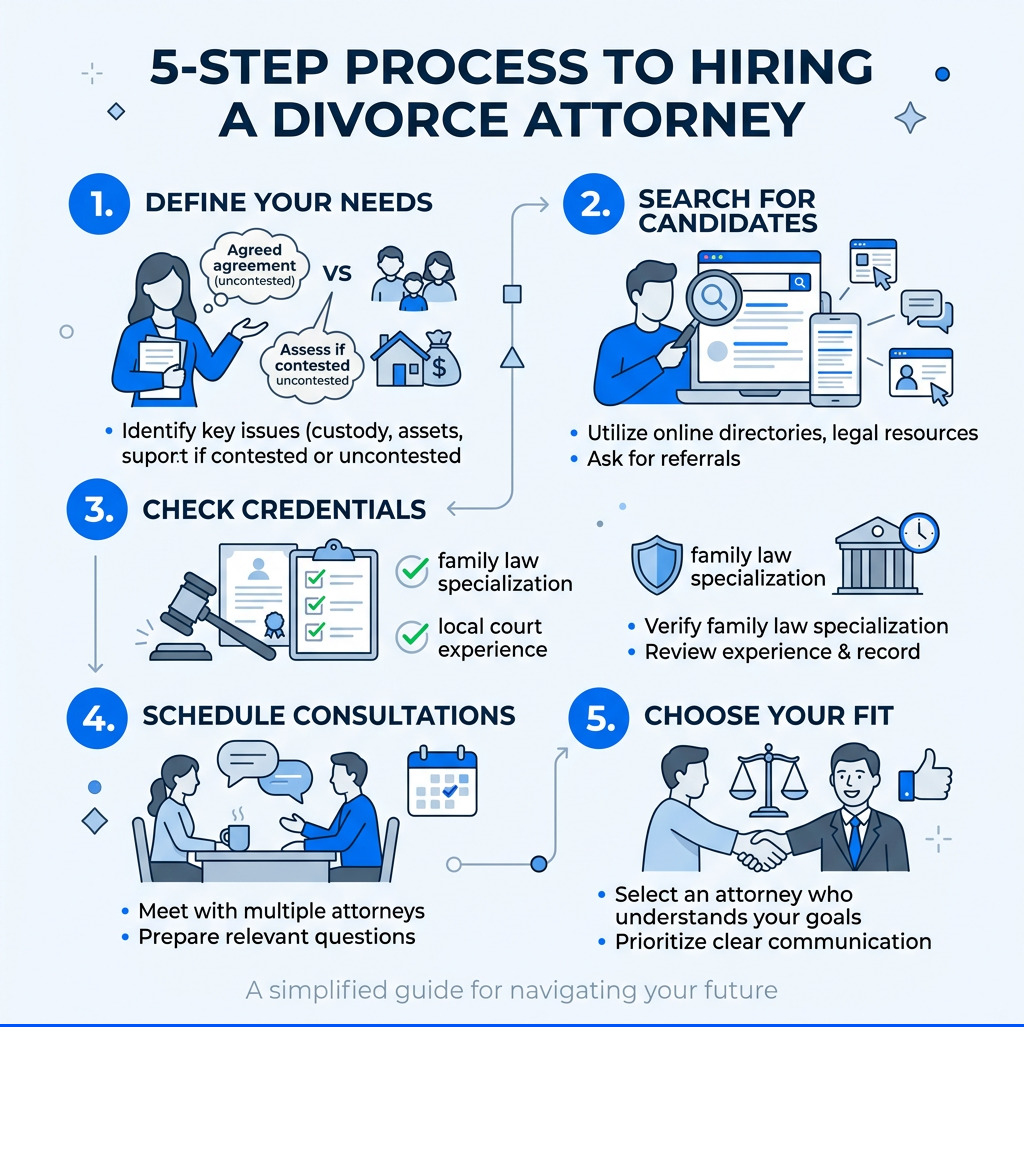
If you need to find a divorce attorney, here are the most important steps to get started:
- Define your needs – Know whether your divorce is contested or uncontested, and identify key issues like custody, assets, or support.
- Search for candidates – Use referrals, online directories (Justia, Nolo, Martindale-Hubbell), and your state bar association.
- Check credentials – Look for family law specialization, local court experience, and a clean professional record.
- Schedule consultations – Meet with several attorneys before deciding. Pinkham & Associates, APLC offers a free consultation.
- Choose your fit – Pick someone who understands your goals, communicates clearly, and has relevant local experience.
Divorce ranks as the second most stressful life event a person can face, according to the Holmes and Rahe Stress Scale — surpassed only by the death of a spouse. If you’re a parent in Southern California dealing with custody disputes, asset division, or support issues, the pressure can feel overwhelming.
The good news? You don’t have to navigate this alone.
The right attorney does more than file paperwork. They protect your rights, advocate for your children, and help you make clear-headed decisions during one of the hardest seasons of your life.
But with hundreds of family law attorneys to choose from — especially in a place like Orange County — knowing how to find the right one matters just as much as finding one at all.
This guide walks you through exactly how to do that.
Why You Need to Find a Divorce Attorney for Your Case
Many people wonder if they truly need professional help to end a marriage. While the law doesn’t strictly require it, the stakes are incredibly high. According to USA Today, 41% of first marriages end in divorce, and that number climbs to 60% for second marriages and 70% for third. With divorce being so common, the legal system has become highly specialized.
When you find a divorce attorney, you aren’t just hiring a “paperwork shuffler.” You are hiring a strategist who handles:
- Rights Protection: Ensuring you don’t accidentally sign away your right to future support or your fair share of retirement accounts.
- Asset Valuation: Identifying and valuing marital and separate property. This includes complex tasks like finding hidden assets or valuing a family business.
- Child Custody: Drafting parenting plans that actually work for your family’s schedule and protect your child’s best interests.
- Future Security: Calculating child and spousal support accurately to ensure you can maintain a stable household post-divorce.
Trying to handle these issues while under the immense stress of a breakup often leads to “buyer’s remorse” later. A lawyer provides the objective, legal lens necessary to protect your future.
Not every divorce requires a “War of the Roses” courtroom battle. If you and your spouse agree on every single issue—from who gets the dog to how the 401(k) is split—you may have an uncontested divorce.
However, even in “amicable” situations, it is wise to have an attorney review the final decree. One wrong word in a custody order can lead to years of scheduling headaches. If there is even one point of disagreement—whether it’s the value of the house or the holiday visitation schedule—the case is “contested.” In these instances, litigation risks increase, and having a fearless advocate becomes essential to ensure a fair settlement negotiation or, if necessary, a successful trial.
Key Steps to Find a Divorce Attorney Who Fits Your Needs
Finding the right legal partner is a process of elimination. You want someone who isn’t just a great lawyer, but the right lawyer for your specific life circumstances.
Using Online Directories to Find a Divorce Attorney
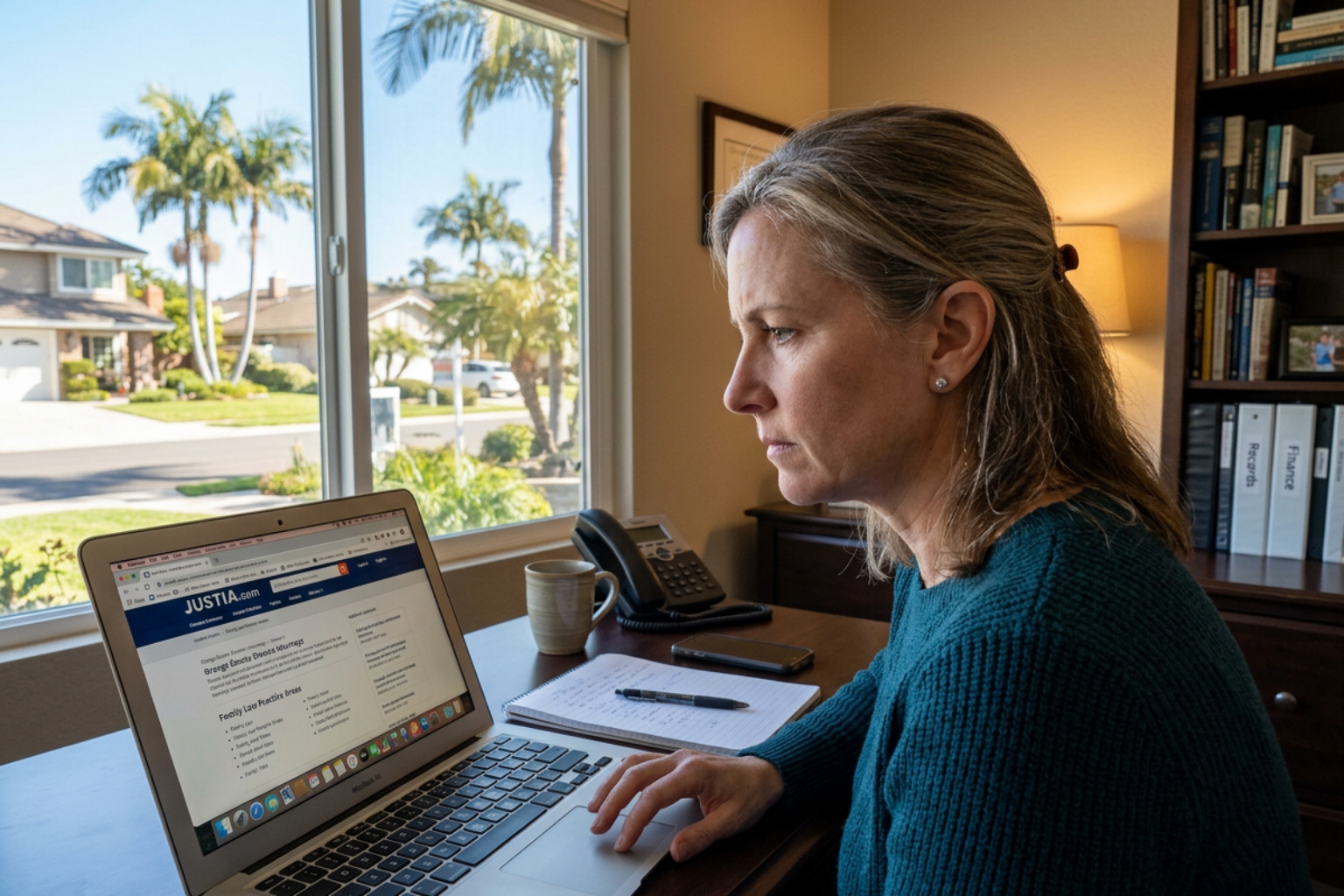
The internet is usually the first stop. Top legal directories offer searchable databases of prescreened attorneys. These platforms allow you to filter by location, specialization, and language.
- Justia: A comprehensive directory that allows you to view recently viewed profiles and compare different firms side-by-side.
- Nolo and Lawyers.com: These sites provide searchable databases of attorneys who specialize exclusively in family law.
- Martindale-Hubbell: Known for its “Peer Review Ratings,” this site helps you see how other lawyers view a specific attorney’s ethical standards and legal ability.
While online reviews are helpful, remember to look for a high volume of consistent, detailed reviews rather than just one or two five-star ratings.
Evaluating Local Focus and Experience
If your case is in the Orange County Superior Court, you should hire an attorney who spends their time there. Why? Because local focus matters.
An attorney who regularly practices in Irvine, Tustin, or Newport Beach knows the local judges, the specific court clerks, and the “unwritten” rules of the local bench. This familiarity can lead to more efficient proceedings and more accurate predictions of how a judge might rule on your specific custody or support issue. When you look for custody attorneys who actually get it, prioritize those with 25+ years of experience in your specific county.
Evaluating Experience, Fees, and Professional Credentials
Let’s talk about the elephant in the room: cost. According to Clio, the national average hourly rate for a family law lawyer in 2024 was $314. However, in high-cost areas like Orange County, rates can vary significantly based on the attorney’s expertise.
| Fee Type | What it Covers | Best For |
|---|---|---|
| Hourly Fee | Billing for time spent on your case (usually in 6-minute increments). | Most contested divorces where the timeline is unpredictable. |
| Flat Fee | A single, set price for the entire process. | Simple, uncontested divorces with no major disputes. |
| Retainer | An upfront “down payment” held in a trust account. | Standard practice for almost all family law firms. |
Don’t just look for the “cheapest” option. An inexperienced lawyer who bills $200 an hour but takes ten hours to do a task is more expensive than an expert who bills $400 but finishes the same task in two hours. For high-asset divorces, you need a team that understands complex financial structures, even if the hourly rate is higher.
Checking Professional Records and Board Certification
Before you sign a retainer, do a quick “background check” on the attorney:
- State Bar Website: Check the California State Bar website to ensure the lawyer is in good standing and has no history of public disciplinary action.
- Board Certification: In California, a “Certified Family Law Specialist” (CFLS) is an attorney who has passed an additional rigorous exam, demonstrated a high level of experience in family law, and been favorably evaluated by peers and judges. Only a small percentage of California attorneys hold this distinction.
- Peer Recognition: Look for awards that are merit-based, rather than those that can be “purchased” by the law firm.
What to Ask During Your Initial Consultation
The initial consultation is your “interview” of the lawyer. It’s not just about the lawyer learning about you; it’s about you deciding if you trust them with your future.
When you meet, consider asking:
- “What is your strategy for my specific goals?” Listen for a personalized answer, not a generic “one-size-fits-all” speech.
- “How do you handle communication?” Will you be speaking with the attorney directly, or a paralegal? How quickly can you expect a return call?
- “Who else on your team will be working on my case?”
- “What is your assessment of the strengths and weaknesses of my position?” You want an honest answer, not just what you want to hear.
Sometimes, if a case is particularly complex or you feel your current representation isn’t meeting your needs, it may be time to get a second opinion about your divorce.
Red Flags to Avoid When You Find a Divorce Attorney
Be wary of any attorney who exhibits the following behaviors during your first meeting:
- Guaranteed Outcomes: No one can guarantee a specific result in court. If they promise you’ll get “everything,” they are likely overpromising to get your retainer.
- Lack of Empathy: If they treat you like just another file number, they won’t provide the personalized advocacy you need.
- High-Pressure Sales: You should never feel “forced” to sign a contract on the spot.
- Poor Responsiveness: If it takes a week to get an initial consultation, imagine how long it will take to get an update on your case.
You can use online tools to compare attorney profiles to see how different firms stack up in terms of experience and client feedback.
Working Effectively with Your Legal Team
Once you have selected your advocate, your job isn’t over. A successful divorce outcome is a partnership. To get the best results:
- Be Honestly Brutal: Tell your lawyer everything—the good, the bad, and the ugly. They can’t protect you from things they don’t know about.
- Be Organized: If your lawyer asks for financial statements, provide them promptly and clearly labeled. This saves them time and saves you money.
- Follow Advice: You are paying for their expertise. If they suggest a specific negotiation tactic, it’s usually backed by years of experience in the local courts.
- Communicate Promptly: Legal deadlines (statutes of limitations or court-ordered response times) are strict. Missing a deadline because you didn’t check your email can be catastrophic.
Frequently Asked Questions about Finding a Lawyer
When is self-representation (pro se) a viable option?
Representing yourself (going “pro se”) is usually only a good idea in very specific circumstances:
- The marriage was very short (less than two years).
- There are no children involved.
- There are no significant assets (no real estate, no pensions).
- Both parties are in 100% agreement on every detail.
If your spouse has an attorney, you almost certainly need one too. The “power imbalance” in a courtroom can lead to a very one-sided final judgment. If finances are a major hurdle, look for legal aid resources in Orange County.
No. In California, an attorney cannot represent both spouses in a divorce because it is a direct conflict of interest. Even if you are completely amicable, an attorney’s job is to advocate for your best interests, which are legally opposite to your spouse’s interests in a dissolution.
However, you can hire a neutral mediator to help you reach an agreement, but that mediator does not “represent” either of you. Most experts recommend that each spouse has their own independent counsel to review any agreement reached in mediation.
How does location affect my choice of attorney?
Location is more than just a convenient office address. It’s about jurisdictional knowledge. A lawyer who primarily works in Los Angeles may not be familiar with the specific procedural preferences of a judge in Costa Mesa or Tustin.
Furthermore, hiring an out-of-county lawyer can increase your costs significantly due to travel time and “learning curve” expenses. Choosing a firm with deep roots in Orange County—serving Irvine, Yorba Linda, and Newport Beach—ensures that your legal team is operating in their “home court.”
Conclusion
Finding the right divorce lawyer is the most important decision you will make for your post-divorce life. It’s the difference between a future of financial stability and co-parenting peace, or years of legal and emotional “drama.”
At Pinkham & Associates, APLC, we bring over 25 years of exclusive focus on family law to the table. Whether you are facing a contested divorce in Tustin, a complex executive divorce, or a same-sex divorce, we provide the personalized strategies and fearless advocacy you deserve.
We understand the stress you are under, and we are here to help you move forward with dignity and security.
Ready to take the first step toward your new future? Start your divorce consultation with Pinkham & Associates, APLC today. We offer free consultations to help you understand your rights and build a winning strategy.