


What a California Divorce Decree Means for You
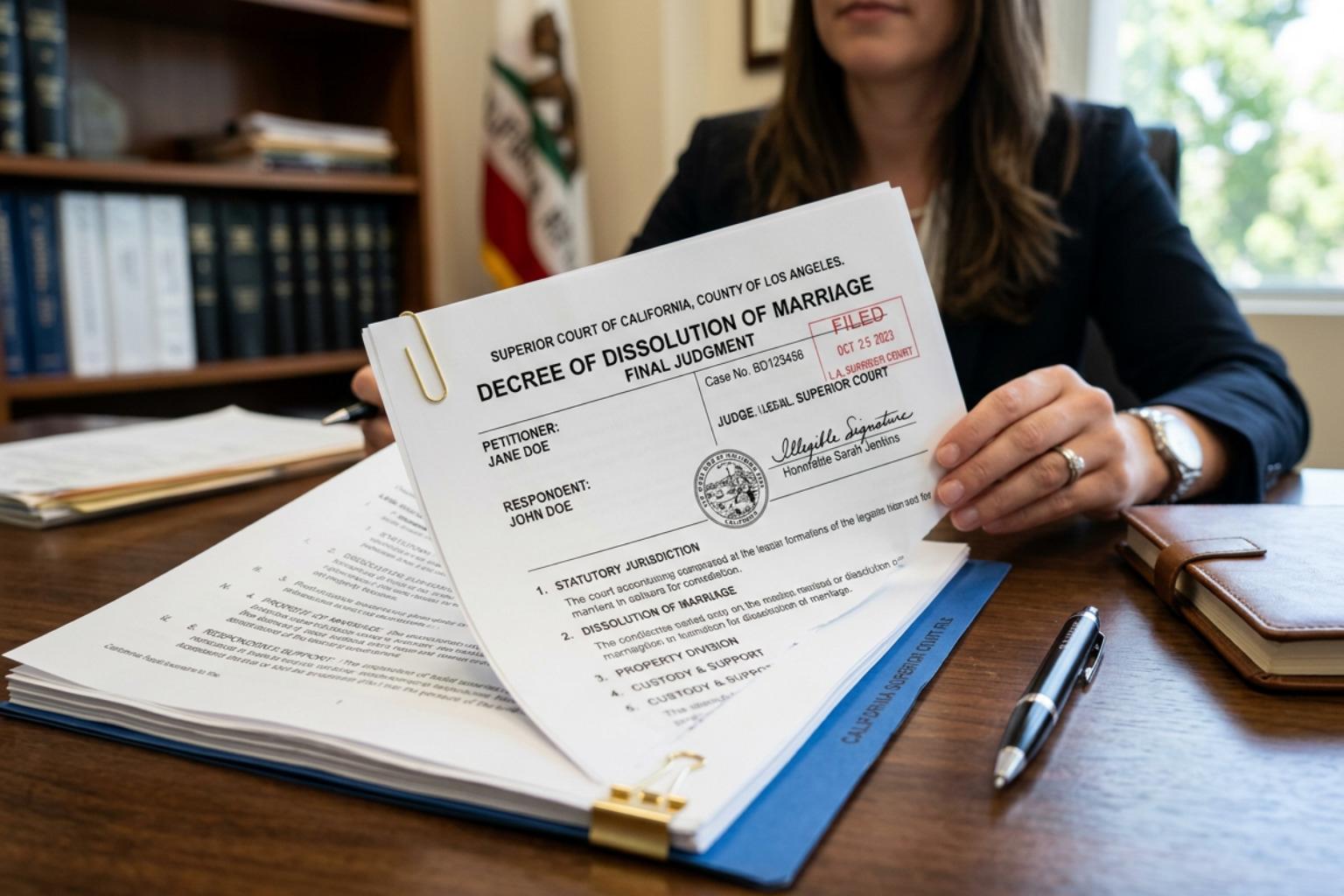
A divorce decree in California is the final court order that legally ends your marriage. It’s also called the Final Judgment of Dissolution, and it’s the document that makes everything official — your marital status, your property split, your custody arrangement, and your support obligations.
Here’s what you need to know right away:
- What it is: A signed court judgment (Form FL-180) issued by a California Superior Court judge
- What it does: Legally terminates your marriage and sets enforceable terms for property, debt, custody, and support
- Where to get a copy: From the Superior Court in the county where your divorce was filed
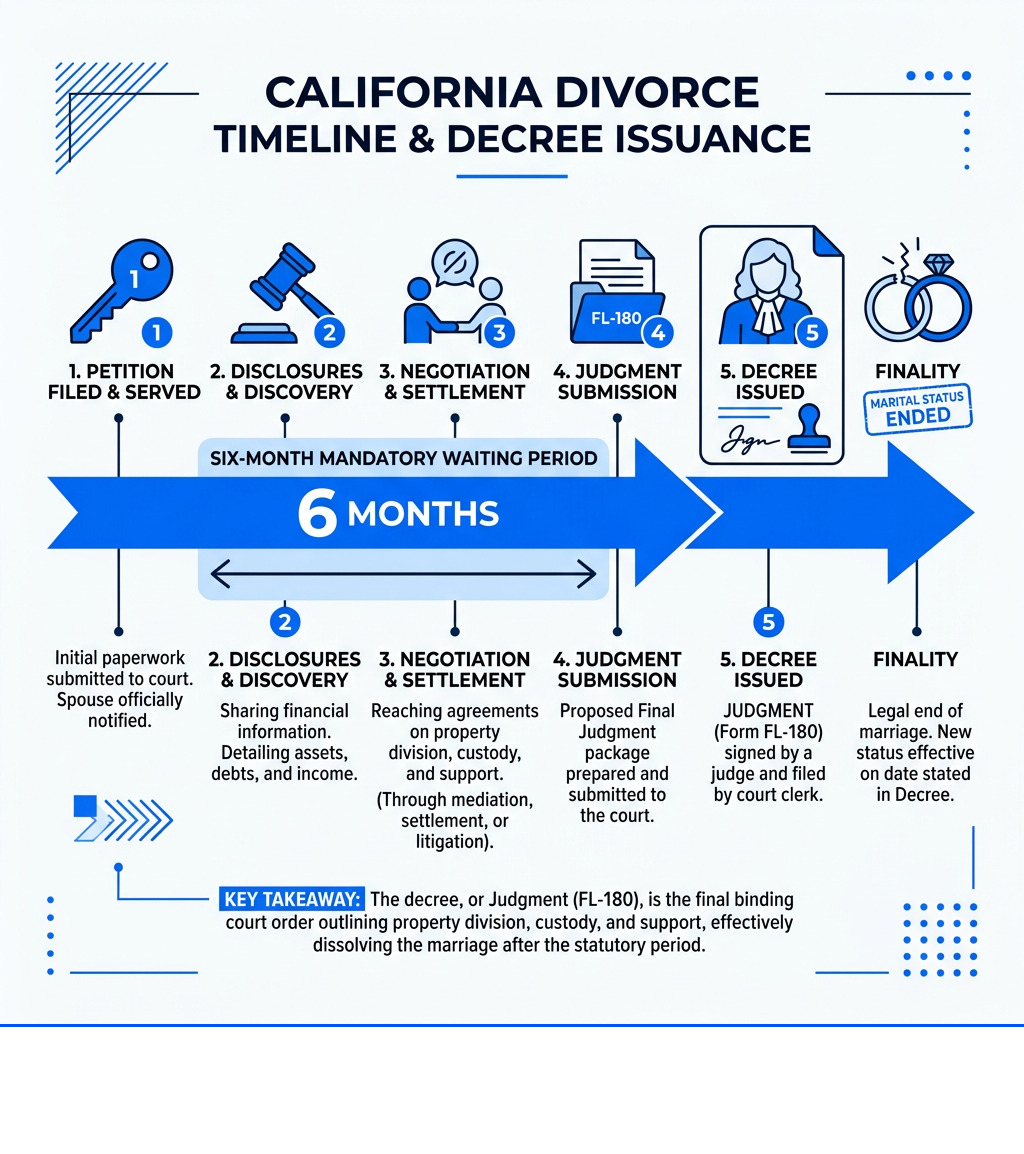
- How long it takes: California requires a minimum 6-month waiting period from the date your spouse is served before a divorce can be finalized
- Cost of a copy: Varies by county, but certified copies typically cost a small per-page fee at the courthouse
This is not the same as a divorce certificate, which is a simpler document showing only basic facts like names and dates.
If you’re a parent going through a divorce in Southern California, you already know how much is at stake — your kids, your home, your financial future. Understanding your divorce decree is the first step to protecting all of it.
This guide walks you through everything: what the decree contains, how to get a copy, how to enforce it if your ex isn’t following it, and what to do if circumstances change.
What is a Divorce Decree in California?
In the Golden State, a divorce decree in California is formally known as the Judgment (Form FL-180). Think of it as the “rulebook” for your post-divorce life. While many people focus on the emotional end of a marriage, the law views marriage as a contract. The decree is the legal instrument that dissolves that contract and replaces it with new, court-ordered obligations.
The process culminates when a judge signs the form FL-180. This document doesn’t just say you are single; it incorporates all the specific details of your case, including community property division, debt allocation, and child-related orders. Once the judge signs it and the court clerk enters it into the record, the terms become legally binding.
You will also likely receive a Notice of Entry of Judgment (Form FL-190). This is a shorter document that tells you exactly when the judgment was entered and, crucially, the date your marital status officially ends. In California, you aren’t legally “single” until the date listed on this notice, even if the judge signed the paperwork weeks earlier.
Understanding the nuances between different types of filings is important. For instance, some couples opt for a legal separation vs divorce in Orange County, which results in a similar judgment regarding property and support but does not end the marriage itself.
Difference Between a Certificate of Record and a Divorce Decree in California
It is a common mistake to use the terms “decree” and “certificate” interchangeably, but they serve very different purposes.
- Divorce Decree (Judgment): This is the full, multi-page document issued by the Superior Court. It contains every detail of your settlement or trial verdict. You need this to enforce support, divide a 401(k), or prove specific custody rights.
- Divorce Certificate (Certificate of Record): This is a one-page document issued by the State. In California, the Department of Public Health – Vital Records (CDPH-VR) only maintains these records for the years 1962 through June 1984.
The CDPH-VR records are extremely limited. They only contain the names of the parties, the filing date, the county, and the case number. They do not contain the actual terms of the divorce. If your divorce happened outside of that 1962–1984 window, or if you need the actual orders signed by the judge, you must contact the court where the case was handled.
| Feature | Divorce Decree (Judgment) | Divorce Certificate (Record) |
|---|---|---|
| Issuer | County Superior Court | State Vital Records (CDPH-VR) |
| Contents | Full orders on assets, kids, support | Names, date, and county only |
| Primary Use | Legal enforcement & modifications | Name changes & remarriage |
| Availability | All years | Limited (1962 – June 1984) |
Legal Requirements for a Valid Divorce Decree in California
For a divorce decree in California to be valid, several strict legal hurdles must be cleared. First, California has a mandatory six-month waiting period. This means the court cannot legally terminate your marital status until at least six months have passed since the day the “Respondent” (the spouse who didn’t file) was served with the papers.
Additionally, residency requirements must be met: at least one spouse must have lived in California for six months and in the specific county of filing for three months.
One of the most critical steps for a valid judgment is the exchange of financial disclosures. Both parties must complete a Preliminary Declaration of Disclosure, listing all assets and debts. If a spouse hides assets, the judgment could be set aside years later. If you find yourself in a situation where a spouse refuses to sign divorce papers, the process can still move forward through a “default” judgment, provided you have followed all service and disclosure rules correctly.
How to Obtain a Copy of Your Records from the Court
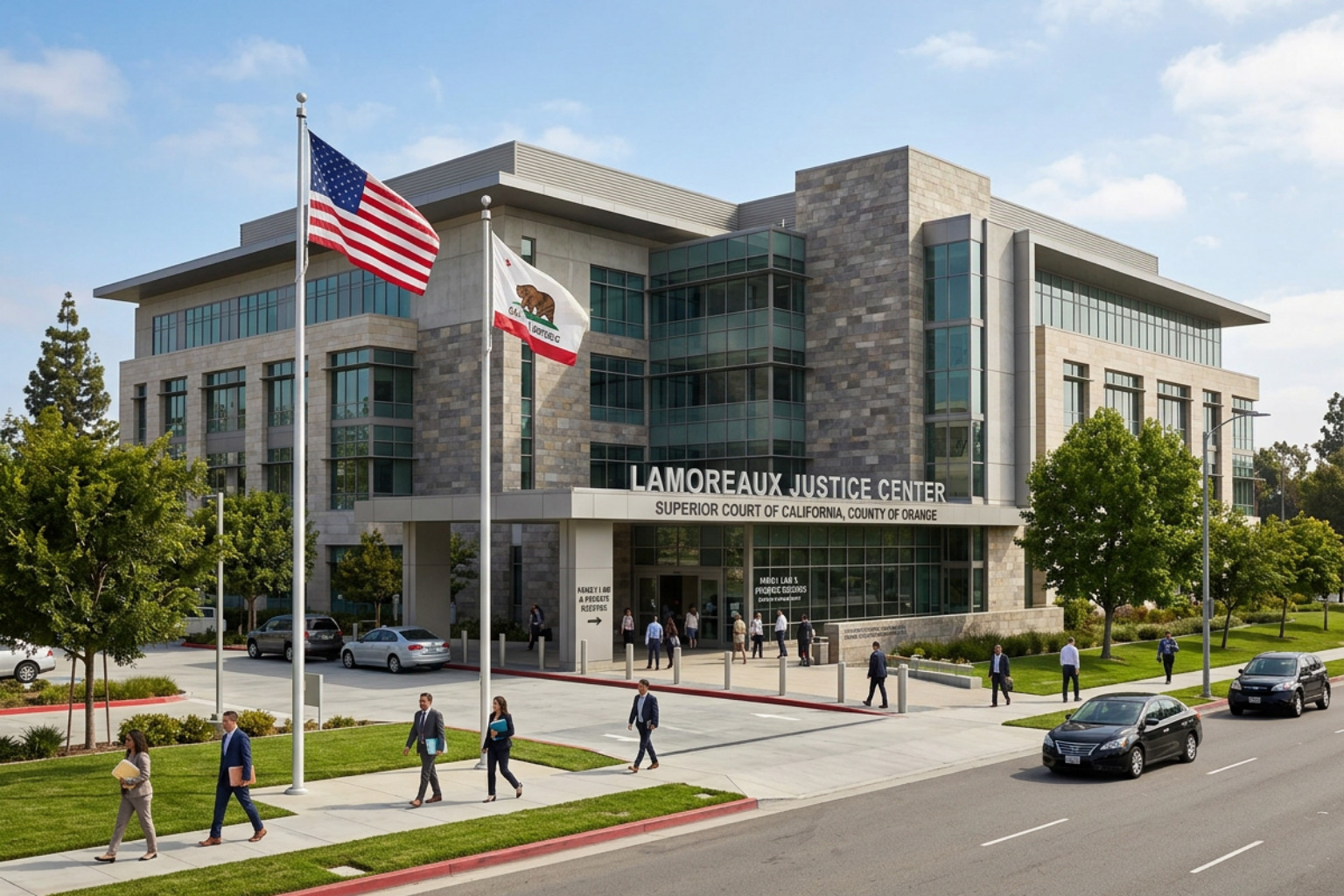
If you have lost your original documents, you can obtain a certified copy from the Superior Court in the county where the divorce was finalized. For those in Orange County, this usually means visiting the Lamoreaux Justice Center in Orange, CA.
To get your records, you generally have three options:
- In-Person: Visit the clerk’s office. In Orange County, you may need to fill out Form #L-3009 (Request for Copies).
- By Mail: Send a written request with a self-addressed stamped envelope and a check for the fees. In counties like Orange or Santa Clara, mailed requests can take 30 to 45 days to process.
- Online: Many courts now offer electronic portals for viewing case summaries, though getting a certified copy usually requires an extra step.
Knowing how to file divorce documents correctly at the start of your case ensures that your records are easily searchable later.
Ordering a Divorce Decree in California Online
While the state doesn’t have a single “one-click” shop for all years, modern technology has made the process easier. Services like VitalChek act as authorized intermediaries for many government agencies, using identity verification technology to process requests.
In Orange County, the “my eClerk” portal allows users to search for family law cases and, in some instances, purchase electronic copies of documents. For residents further north, the Santa Clara County Superior Court provides similar self-help resources for record retrieval.
Under California Rules of Court, Rule 2.251(b)(1)(B), electronic signatures are now widely accepted in family law, provided the parties have consented to electronic service. This has significantly streamlined the “entry of judgment” process in high-volume counties.
Key Information Included in the Final Judgment
Your divorce decree in California is much more than a “we’re broken up” note. It is a comprehensive financial and parental roadmap. Because California is a community property state, the judgment will detail exactly how assets acquired during the marriage are split.
Key sections of the decree typically include:
- Property and Debt: Who gets the house? Who is responsible for the credit card debt? For business owners, the decree will specify how business interests are divided, which often requires complex valuations.
- Child Custody and Visitation: This section outlines the legal and physical custody arrangements. It is the most vital part of the decree for parents, as it dictates holiday schedules and decision-making power.
- Support Orders: This includes both child support and spousal support (alimony). Spousal support is not automatic; it is based on factors like the length of the marriage, the standard of living, and each person’s earning capacity.
- Name Restoration: If a spouse wants to return to a former legal name, they must ensure this is included in the judgment or file an Ex Parte Application for Restoration of Former Name (Form FL-395).
Enforcing and Modifying Your Divorce Decree in California
A decree is only as good as its enforcement. If an ex-spouse refuses to follow the orders—such as failing to pay support or refusing to sign over a car title—the court has several “teeth” it can use. This includes:
- Contempt of Court: A semi-criminal proceeding that can result in fines or even jail time.
- Wage Garnishment: An “Earnings Assignment Order” that takes support directly from the payer’s paycheck.
- Writ of Execution: Allowing the sheriff to seize assets to satisfy a money judgment.
If you aren’t receiving child support, your local child support agency can often help collect both child and spousal support at no cost to you.
However, life changes. If you lose your job or your child’s needs change, you can’t just stop following the decree. You must file a Request for Order (RFO) to modify the judgment. Modifications are rarely retroactive; you must file the paperwork as soon as the “change in circumstances” occurs. Understanding how long divorces take and the timeline for modifications is essential for planning your future.
Practical Steps After Your Judgment is Issued
Once you have your signed divorce decree in California, your work isn’t quite finished. You must “socialize” the judgment with various agencies to protect your interests.
- Update Beneficiaries: A divorce does not automatically remove your ex-spouse as a beneficiary on life insurance policies. You must manually change these with your provider.
- Tax Relief: If you filed joint returns and your spouse created a tax debt, you may be eligible for Innocent Spouse Relief from the IRS or Innocent Joint Filer Relief for California state taxes.
- DMV and Titles: If the decree awards you a vehicle, you must change the title at the DMV to remove your ex-spouse’s name.
- Retirement Accounts: Splitting a pension or 401(k) usually requires a separate order called a QDRO (Qualified Domestic Relations Order). The decree alone is often not enough for the plan administrator to release funds.
Frequently Asked Questions about California Divorce Records
How do I get a certified copy of my divorce decree in California?
To get a certified copy, you must contact the Clerk of the Superior Court in the county where the divorce was granted. You will need to provide your case number (if you have it), the names of both parties, and pay a certification fee (usually around $15 plus a per-page copy fee). You can do this in person or by mail.
Can I access my divorce records online in Orange County?
Yes, Orange County offers a “Public Access System” where you can view the case index, a list of filed documents, and hearing dates. While you can often purchase and download non-certified electronic copies of certain documents through the “my eClerk” portal, some sensitive family law documents may still require an in-person visit or a mailed request for privacy reasons.
What should I do if I lose my original divorce decree?
Don’t panic! The court keeps the official record. You can simply request a new certified copy from the court clerk. If your divorce was very old (pre-1990s), the records might be stored off-site in archives, which can add a few days to the retrieval time. Having your case number handy will speed up the process significantly.
Conclusion
Navigating the complexities of a divorce decree in California can feel overwhelming, especially when you are trying to rebuild your life. The decree is the foundation of your future financial and parental stability, and getting the details right—from property division to enforcement—is non-negotiable.
At Pinkham & Associates, APLC, they bring over 25 years of exclusive focus on California family law to every case. Whether you are just starting the filing process in Irvine or Tustin, or you need to enforce a judgment in Newport Beach or Costa Mesa, their team provides the fearless advocacy and personalized strategy you deserve. They understand that every family is unique, and they are dedicated to ensuring your final judgment protects what matters most.
If you have questions about your decree or need assistance with a new family law matter, the firm offers free consultations to help you understand your options.