



What to Know Before You Hire a Family Law Attorney
If you’re looking for a family law attorney, here’s what you need to know right away:
The 5 most important things before hiring a family law attorney:
- Scope of services – Family law attorneys handle divorce, child custody, child support, spousal support, property division, paternity, adoptions, and domestic violence protection orders.
- Legal mechanics matter early – The date you separate and automatic restraining orders that kick in at filing can significantly impact your case.
- Support and assets follow specific formulas – California uses set guidelines for child support and a 13-factor test for spousal support.
- Experience and certification are not the same – A Certified Family Law Specialist (CFLS) has passed rigorous testing beyond a standard law license.
- You have options beyond court – Mediation and collaborative law can save time, money, and emotional energy compared to litigation.
Few legal situations are as stressful as a family law dispute. Whether you’re going through a divorce, fighting for custody of your children, or dealing with domestic violence, the decisions you make in the early stages can shape your life for years to come.
Family law cases are emotionally charged and legally complex. And in Southern California, where community property rules, child support formulas, and local court procedures all come into play, choosing the wrong attorney — or not knowing what to look for — can be a costly mistake.
The good news? Knowing the right questions to ask before you hire puts you in a much stronger position from day one.
Pinkham & Associates, APLC offers free consultations so you can get clarity on your situation before making any commitments.
This guide breaks down the five things every parent and spouse in Southern California should understand before signing with a family law attorney.
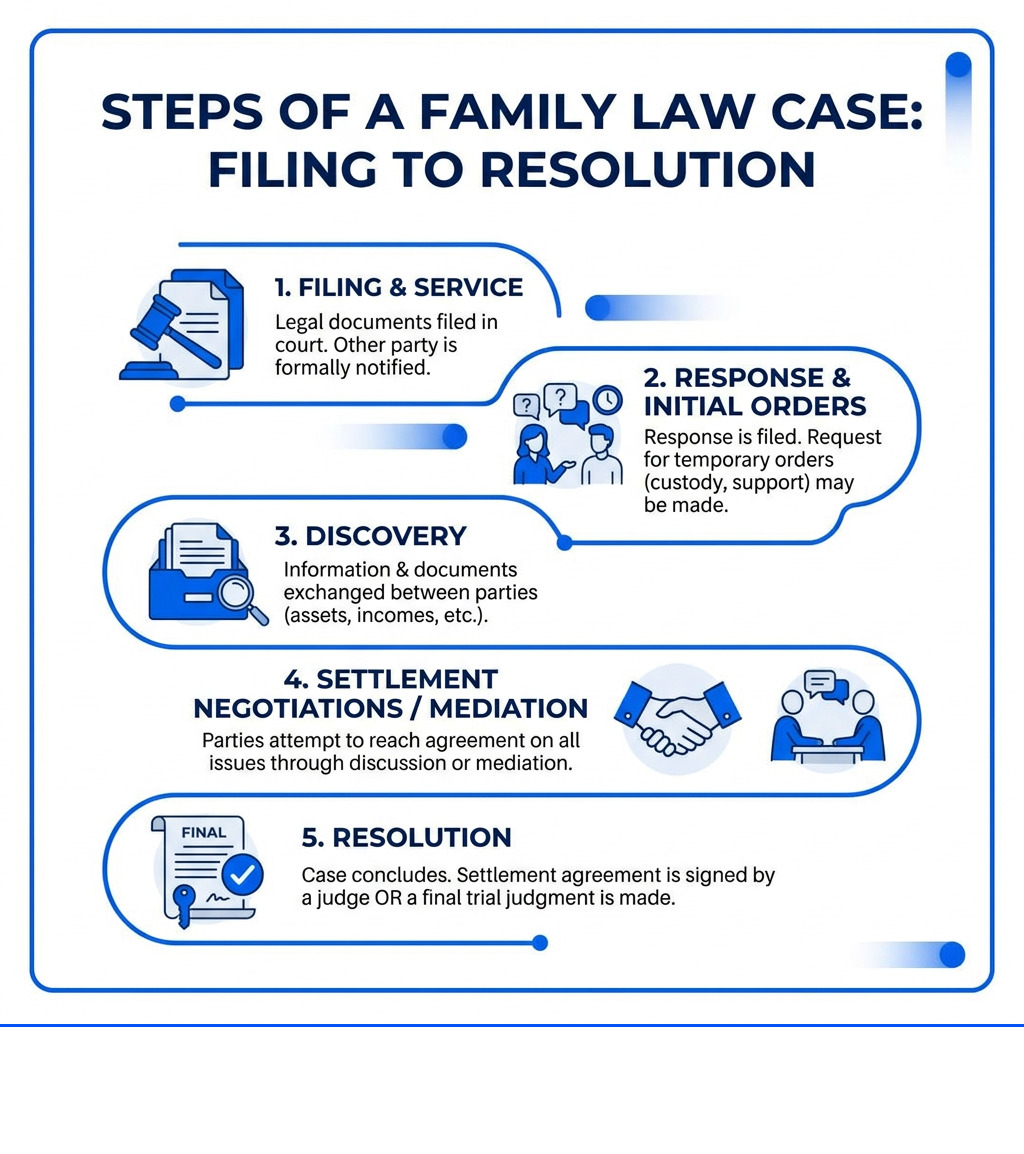
1. Understanding the Full Scope of a Family Law Attorney’s Services
When most people think of a family law attorney, they immediately think of Divorce. While ending a marriage is a primary focus, a truly comprehensive Family Lawyer provides a much broader spectrum of protections for your household.
The legal needs of a family rarely end with a final decree. An experienced attorney helps navigate the “big three” of child-related issues: child custody, child support, and paternity establishment. In California, establishing paternity is a vital first step for unmarried parents; without it, the court cannot legally enforce support orders or parenting time.
Beyond the basics, your attorney acts as a shield in high-stakes situations. This includes filing for Domestic Violence restraining orders or emergency orders of protection when safety is at risk. They also assist with the joy of expanding families through adoptions and the necessity of post-divorce modifications when life changes—such as a job loss or a relocation—require a shift in existing court orders. For a deeper look into the nuances of parenting disputes, you might explore The Ultimate Guide to Finding Custody Attorneys Who Actually Get It.

If your household includes significant wealth, the complexity of your case increases exponentially. Property Division is rarely as simple as splitting a bank account in half. It involves intricate business valuations, identifying hidden assets, and understanding the tax implications of transferring retirement accounts or selling real estate.
In California, spouses owe each other a “fiduciary duty.” This is a high legal standard that requires both parties to be 100% transparent about all assets and debts. If one spouse tries to hide a “secret” investment or undervalues a family business, the court can issue severe financial sanctions. Elite attorneys use forensic accountants and valuation experts to ensure that every dollar is accounted for. To learn more about what to look for in these situations, check out the Top Winning Traits of Elite High Asset Divorce Lawyers.
2. Critical Legal Mechanics: Separation Dates and Restraining Orders
Many people are surprised to learn that some of the most important aspects of their case are triggered the moment they file paperwork—or even before.
First, there is the date of separation. In California, this date is more than just a calendar entry; it marks the moment the “community” ends. Generally, any income earned or debts incurred after this date are considered separate property rather than community property. Determining this date requires showing a “complete and final break” in the marriage, which involves both a subjective intent to end the relationship and objective conduct that reflects that intent. Simply moving into a guest room may not be enough if you are still attending social events as a couple or filing joint taxes.
Second, as soon as a summons is served, Standard Family Law Restraining Orders (SFLROs) go into effect automatically. These aren’t the kind of restraining orders used in domestic violence cases; rather, they are “status quo” orders. They prohibit both spouses from:
- Removing minor children from the state without written consent.
- Transferring, encumbering, or concealing property (with some exceptions for necessities).
- Changing beneficiaries on insurance policies (health, life, or auto).
Violating these orders can lead to contempt of court charges. Furthermore, if one spouse moves out and the other remains in the family home, the court may later apply “Watts charges” (requiring the staying spouse to pay the community for the use of the asset) or “Epstein credits” (reimbursing a spouse who used separate funds to pay community debts after separation). Because these mechanics are so technical, many wonder, “Do I Need a Divorce Lawyer?” The answer is almost always yes to avoid these invisible legal traps.
3. How Support and Assets are Calculated in California
Financial support is often the most contested part of a family law case. California has specific rules for how these numbers are reached.
Child Support is calculated using a statewide algebraic formula, typically processed through software called DissoMaster. The court looks at both parents’ gross incomes, the percentage of time each parent spends with the child, and “add-ons” like health insurance premiums and mandatory daycare costs.
Spousal Support, on the other hand, is more discretionary for long-term orders. While temporary support might use a formula, final orders are based on Family Code §4320. This includes 13 distinct factors, such as the length of the marriage, the standard of living during the marriage, and the age and health of each party.
| Factor | Child Support | Spousal Support |
|---|---|---|
| Primary Method | DissoMaster Formula | Family Code §4320 Factors |
| Income Considered | Both Parents’ Gross Income | Earning Capacity & Assets |
| Duration | Until age 18 (or 19 if in high school) | Varies (often half the length of marriage) |
| Tax Treatment | Tax-free to recipient | Generally not deductible for payor |
When it comes to assets, California is a community property state. This means all assets acquired during the marriage are owned equally (50/50). However, if you used separate property (like an inheritance or money you had before the wedding) to buy a family home, you may be entitled to a “separate property reimbursement.” Tracing these funds requires meticulous record-keeping and expert legal guidance.
4. Why Experience and Board Certification Matter
When you are searching for a family law attorney in Orange County, you will notice that some carry the title of Certified Family Law Specialist (CFLS). This is a crucial distinction.
A Specialist has gone far beyond the standard bar exam. They have passed a rigorous second bar exam specifically focused on family law, demonstrated a high level of trial experience, and been favorably evaluated by other judges and attorneys in the field. This level of expertise is invaluable in complex cases involving business owners or high-conflict custody battles.
Beyond certifications, local court familiarity is a hidden advantage. An attorney who regularly practices in the Orange County Superior Courts in Orange, Irvine, or Costa Mesa knows the specific preferences and “judge biases” of the local bench. They know how a particular judge views “move-away” cases or how they tend to rule on spousal support duration. This allows your attorney to tailor your strategy for the highest chance of success. Understanding How to Choose the Right Divorce Lawyer in Orange County means looking for this blend of high-level certification and local boots-on-the-ground experience.
5. Choosing Your Path: Mediation vs. Litigation
The final thing you must know is that “going to court” is not your only option. In fact, for many families, it is the least desirable option.
Mediation and collaborative law allow you and your spouse to sit down with a neutral third party to resolve your issues privately. The benefits of mediation include:
- Lower Costs: Generally much cheaper than a full-scale trial.
- Speed: You aren’t tied to the crowded court calendar.
- Confidentiality: Your financial details and “dirty laundry” stay out of public records.
- Control: You decide the outcome, rather than a judge who doesn’t know your family.
However, mediation requires two willing participants. In high-conflict divorces—especially those involving domestic violence or hidden assets—litigation may be necessary. A great firm offers both: the empathy to settle cases through mediation and the “fearless advocacy” to fight in court when a settlement isn’t possible.
Mediation vs. Litigation: Finding the Right Path with Your Family Law Attorney
At Pinkham & Associates, APLC, the Team focuses on personalized strategies. They aren’t “cookie-cutter” lawyers. Some cases need a gentle touch to preserve a co-parenting relationship, while others require aggressive advocacy to protect a client’s financial future.
Whether you are in Yorba Linda, Tustin, or Placentia, you deserve an attorney who is trial-tested but settlement-minded. You can learn more About our philosophy of putting the client’s goals first, whether that means a quiet mediation or a hard-fought trial.
Frequently Asked Questions about Family Law Attorneys
How is child support calculated in California?
California uses a statewide uniform formula. The primary factors are the parents’ respective gross incomes and the “time-share” (the percentage of time each parent has primary physical responsibility for the children). The court also considers mandatory deductions like taxes, health insurance premiums, and union dues. Most attorneys use DissoMaster software to provide an accurate estimate.
What are Standard Family Law Restraining Orders (SFLROs)?
These are automatic orders that appear on the back of the Summons in every California divorce case. They are designed to maintain the status quo. They prohibit both parties from moving the children out of state, changing insurance policies, or selling/transferring property without the other party’s written consent or a court order.
What should I bring to my initial consultation with a family law attorney?
To make the most of your free consultation, you should bring:
- Any court documents you have already been served with.
- Your most recent tax returns and pay stubs.
- A basic list of your assets (homes, cars, retirement accounts) and debts.
- Any existing custody or prenuptial agreements.
- A list of your top three goals for the outcome of the case.
Conclusion
Hiring a family law attorney is one of the most significant investments you will ever make—not just in terms of money, but in terms of your future peace of mind. With over 25 years of exclusive focus on family law in Orange County, Pinkham & Associates, APLC provides the fearless advocacy and personalized strategy needed to navigate these turbulent waters.
From the initial filing to final property division and post-divorce modifications, our firm is trusted by clients and peers alike for a high success rate and a commitment to excellence. If you are facing a family law challenge in Irvine, Costa Mesa, Newport Beach, or the surrounding areas, don’t go it alone.
Take the first step toward your new life today. Contact Us for a free consultation and let us help you find the best path forward for you and your family. For more information on starting the process, visit our Divorce services page.