



When You Need Custody Attorneys in My Area: Here’s What to Know First

Custody attorneys in my area are licensed family law lawyers who handle child custody disputes in your local courts — and finding the right one can make a real difference in your case outcome.
Quick answer: What to look for when searching for local custody attorneys:
- Local court experience — attorneys familiar with your specific courthouse and judges
- Family law specialization — focused practice in custody, not just general law
- Clear communication — responsive, keeps you informed at every step
- Strategy that fits your situation — from cooperative co-parenting plans to high-conflict litigation
- Free consultation — a chance to assess fit before committing
If you’re a parent in Southern California facing a custody dispute, you’re not alone — and the stakes couldn’t feel higher.
Custody cases are legally complex and emotionally exhausting. You’re making decisions that shape your child’s daily life, schooling, healthcare, and future. One wrong move in court can cost you parenting time that’s hard to recover.
The good news? You don’t have to figure this out on your own.
At Pinkham & Associates, APLC, we offer a free consultation so you can get real answers from experienced local attorneys before deciding on your next step.
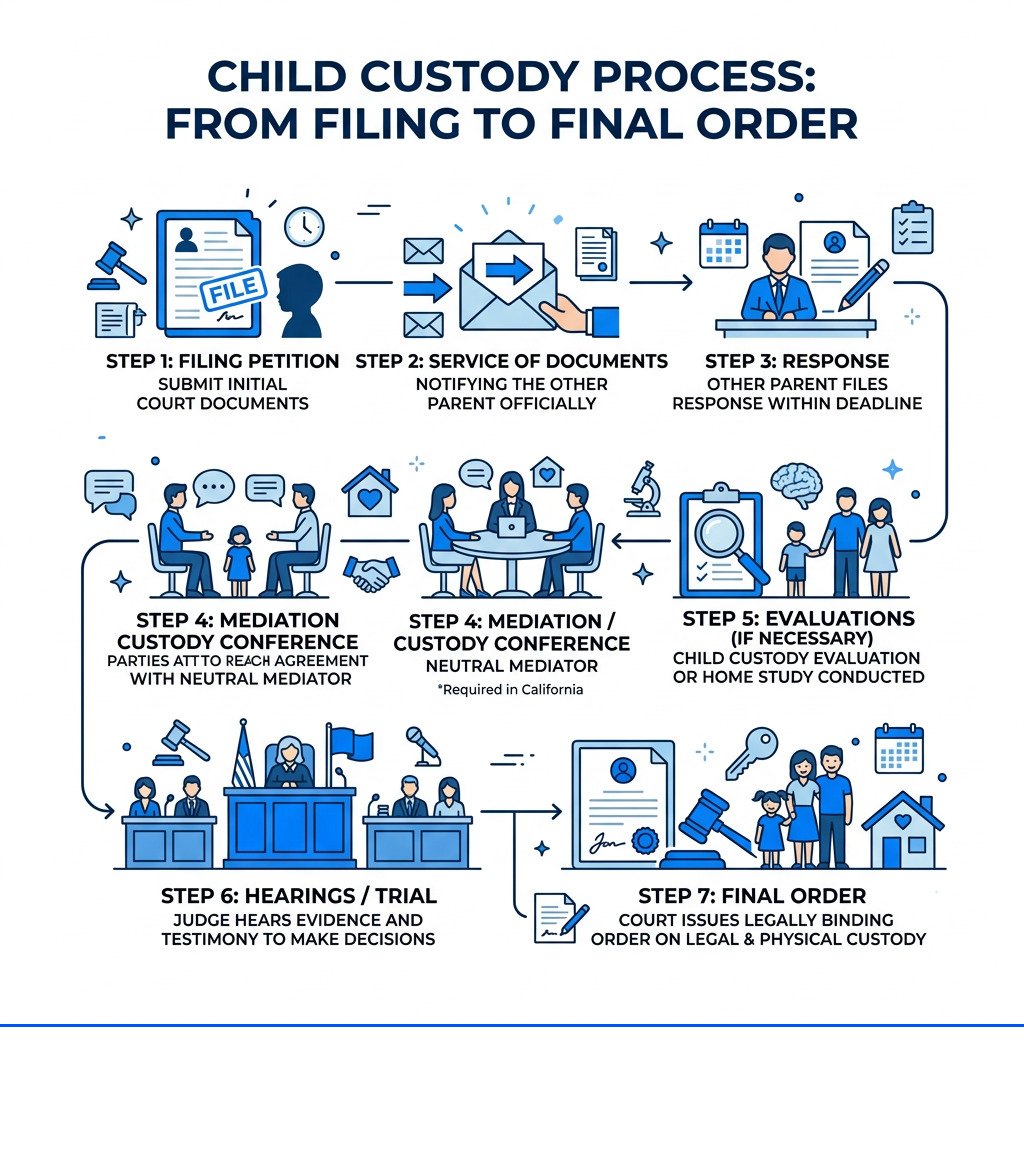
Understanding Custody Fundamentals: Legal vs. Physical
When you begin searching for custody attorneys in my area, the first thing they will explain is that “custody” isn’t just one thing. In California, custody is split into two distinct categories: legal and physical. Understanding the difference is vital because it dictates how much control you have over your child’s upbringing and how much time you actually spend with them.
Legal Custody refers to the right and responsibility to make important decisions about a child’s health, education, and welfare. This includes choosing their school, deciding on medical treatments, and determining their religious upbringing. Most courts prefer that parents share this responsibility unless there is a compelling reason not to.
Physical Custody deals with where the child lives and who provides their day-to-day care. This is the “boots on the ground” part of parenting. A parent with physical custody is responsible for the child’s immediate needs—meals, bedtime, and getting them to school on time.
For a deeper dive into how these rules apply today, check out California Child Custody Laws 2025: What You Need to Know. Navigating these definitions is the first step in building a solid Child Custody case.
Joint vs. Sole Custody Arrangements
The court’s goal is usually to keep both parents involved. However, the specific “label” of your custody arrangement can vary based on your family’s unique dynamics.
- Joint Custody: This is the most common arrangement. In joint legal custody, both parents must consult each other on major life decisions. In joint physical custody, the child spends significant periods of time with each parent. It doesn’t always mean a perfect 50/50 split, but it ensures the child has frequent and continuing contact with both.
- Sole Custody: This is awarded when the court determines that one parent should have primary responsibility. Sole legal custody means one parent makes all the big decisions without needing the other’s consent. Sole physical custody means the child lives with one parent most of the time, while the other may have Visitation rights.
| Feature | Joint Custody | Sole Custody |
|---|---|---|
| Decision Making | Shared by both parents | One parent decides |
| Living Arrangement | Child spends time with both | Child lives with one parent |
| Court Preference | Generally favored in CA | Awarded if “Best Interests” demand it |
| Flexibility | Requires high co-parenting cooperation | Provides more stability in high-conflict cases |
Why You Need Local Custody Attorneys in My Area
You might wonder if you can just hire any high-profile lawyer from across the state. The truth is, family law is incredibly “local.” When you search for custody attorneys in my area, you are looking for someone who knows the hallways of the Lamoreaux Justice Center in Orange County.
Local attorneys understand the “flavor” of the local courts. They know the specific preferences of the judges and how the local court staff operates. This insider knowledge is invaluable. For instance, knowing exactly What Happens at a First Custody Hearing in Orange County can help lower your anxiety and ensure your paperwork is filed exactly how the local clerk expects it.

Evaluating Custody Attorneys in My Area for High-Stakes Cases
Not all custody battles are created equal. Some are amicable, while others involve high-stakes disputes, complex assets, or Dealing with an Abusive or Difficult Co-Parent. In these scenarios, you need more than just a document preparer; you need a strategic advocate.
A top-tier Irvine Child Custody Lawyer will focus on trial preparation from day one. Even if you hope to settle out of court, being “trial-ready” gives you the upper hand in negotiations. You want an attorney who has a professional reputation for being fearless in the courtroom but compassionate in the office. This balance ensures that your rights are protected while your child’s emotional needs remain the priority.
The “Best Interests” Standard and Working Parents
In California, the “North Star” for every custody decision is the Best Interests of the Child. The court doesn’t care about what’s “fair” for the parents; it cares about what is best for the kid.
When a judge considers the best interests of the child, they look at:
- The child’s health, safety, and welfare.
- Any history of abuse by either parent.
- The nature and amount of contact with both parents.
- The child’s emotional ties to each parent.
For a detailed breakdown of how you can prove you meet these standards, see The Best Interests of a Child Test.
Protecting Rights for the 66.5% of Working Families
One of the biggest fears for modern parents is that their career will be held against them. Statistics show that 66.5% of families with children in the U.S. have both parents working. If you work long hours or have a demanding job in Irvine or Costa Mesa, you might worry the court will see you as “unavailable.”
Experienced custody attorneys in my area know how to fight this bias. Parenting ability is not measured solely by the number of hours you are physically in the house, but by the quality of care and the stability you provide. We help clients design evidence-based parenting plans that account for professional demands while maximizing Child Custody and Timeshare to ensure you remain a central figure in your child’s life.
How Custody Attorneys in My Area Handle Mediation
In Orange County, mediation is often a mandatory step before you can see a judge. This is actually a good thing! Mediation allows parents to stay in the driver’s seat of their own lives rather than letting a stranger in a black robe make the decisions.
Mediation is cost-effective and helps preserve the co-parenting relationship, which is vital for the child’s long-term well-being. If you are concerned about costs, you can check if your problem is covered by legal aid (opens in a new tab) to see if you qualify for subsidized help, though most private firms like Pinkham & Associates provide a more personalized, aggressive approach for those who need to ensure their specific goals are met.
Modifications, Violations, and International Disputes
Life doesn’t stand still after a court order is signed. People lose jobs, get promoted, remarry, or decide to move. When a “significant change in circumstances” occurs, you may need to file for a modification.
Common reasons for modification include:
- A parent needs to Relocate Children After Divorce for a new job.
- The child’s educational or medical needs have changed.
- The current schedule is no longer working for the child’s extracurricular activities.
Enforcement and International Jurisdiction
What happens when the other parent simply refuses to follow the rules? If a co-parent violates a custody order, you have the right to seek enforcement through a “Motion for Contempt.” This can lead to fines or even jail time for the offending parent.
Things get even more complicated when a parent tries to move a child across state lines or international borders without permission. California follows the Uniform Child Custody Jurisdiction and Enforcement Act (UCCJEA) to determine which state has the power to make rulings. In international cases, the Civil Aspects of International Child Abduction (The Hague Convention) comes into play. If your child has been taken, taking immediate action is the only way to protect your rights and learn How to Get Child Custody Back.
Frequently Asked Questions about Custody Attorneys
What role does the child’s preference play in custody decisions?
In California, there is no “magic age” where a child gets to pick where they live. However, once a child reaches age 14, the law says the court must let them address the court if they wish to express a preference, provided it is in their best interest. The judge will listen, but they aren’t bound by what the teenager says. They will weigh the child’s maturity and the reasons behind the choice. For more on this, read Can a Child Pick Which Parent to Live with in Orange County?
Do I need a custody attorney if both parents agree on arrangements?
Even if you and your ex are on great terms, “handshake deals” are dangerous in family law. A formal, court-filed order protects you if the relationship sours later. Attorneys ensure the language is clear, enforceable, and covers things you might not think of, like holiday rotations or Paternity rights.
What happens if the other parent violates a custody order?
You should document every violation. If it’s a minor late arrival, keep a log. If it’s a total refusal to return the child, you may need to involve local law enforcement and file an emergency motion in court.
Conclusion
Finding the right custody attorneys in my area isn’t just about hiring a legal expert; it’s about finding a partner who understands that your family is your entire world. At Pinkham & Associates, APLC, we bring over 25 years of exclusive focus on family law to the table. We don’t believe in “cookie-cutter” solutions. Whether you are in Tustin, Newport Beach, or Yorba Linda, we provide personalized strategies and fearless advocacy to protect your parental rights.
If you’re ready to take the next step and secure your child’s future, we are here to help. More info about child custody services is available on our website, or you can call us today to schedule your free consultation.