


- How California Courts Decide Custody in 2025
- 2025 California Parenting Plans that Actually Work
- Domestic Violence, Safety, and Supervised Visitation
- How California Courts Handle Relocation in 2025
- How California Courts Modify and Enforce Custody Orders
- Practical Steps You Can Take to Strengthen Your Custody Case
-
California Child Custody FAQ
- Does 50/50 Custody Mean No One Pays Child Support?
- Can My Teenager Choose Where to Live?
- What if the Other Parent Withholds My Child During My Scheduled Time?
- Can We Use Private Mediation Instead of the Court’s Mediator?
- How Do Courts Handle Substance Abuse Concerns?
- How Long Does a Typical Custody Case Take to Resolve?
- If We Were Never Married, Do We Need a Separate Case for Custody?
- Work with a California Custody Attorney to Build a Strong Case
If you’re co‑parenting in California in 2025, you know that Courts focus on what serves a child’s best interests, not which parent “wins.” That can be reassuring, but still complicated, when you’re deciding schedules, schools, and how to handle changes over time.
Pinkham & Associates has helped parents across Southern California with their custody cases for decades. We focus on practical strategies, clear communication, and solutions that fit real families’ lives.
How California Courts Decide Custody in 2025
California recognizes two kinds of custody: legal custody and physical custody. Legal custody involves decision‑making when it comes to health care, schooling, and major activities, whereas physical custody is where the child lives. Each can be joint (shared) or sole (one parent).
Judges believe that kids benefit from frequent, continued contact with both parents when it is safe to do so. The main factor, however, is always the child’s health, safety, and welfare. California courts weigh the child’s age, school and community ties, parent‑child bond, each parent’s ability to meet the child’s daily needs, and any history of parental abuse or substance misuse.
If the parents can agree on a plan, then a judge can make their agreement a court order. If not, the court may order mediation and, if needed, set a hearing.
2025 California Parenting Plans that Actually Work
A good parenting plan is specific enough to prevent conflict and flexible enough to handle day‑to‑day life. It should address school days, pick‑ups and drop‑offs, holidays, travel, communication rules, methods for schedule changes, transportation costs, and how you’ll handle illnesses, activities, and homework. The more clarity you build into it now, the fewer emergencies you should have later.
Courts also look for developmentally appropriate schedules. For younger kids, frequent shorter visits can help with transitions, but as children get older, week‑on/week‑off or 2‑2‑5‑5 schedules may work better. If parents live far apart, longer blocks of time and detailed travel plans matter.
Build in a dispute‑resolution step (like consulting a mediator) before anyone races back to court.
If you’re unsure where to begin, the team at Pinkham & Associates can help translate your child’s needs into a workable, enforceable plan.
Mediation via Family Court Services
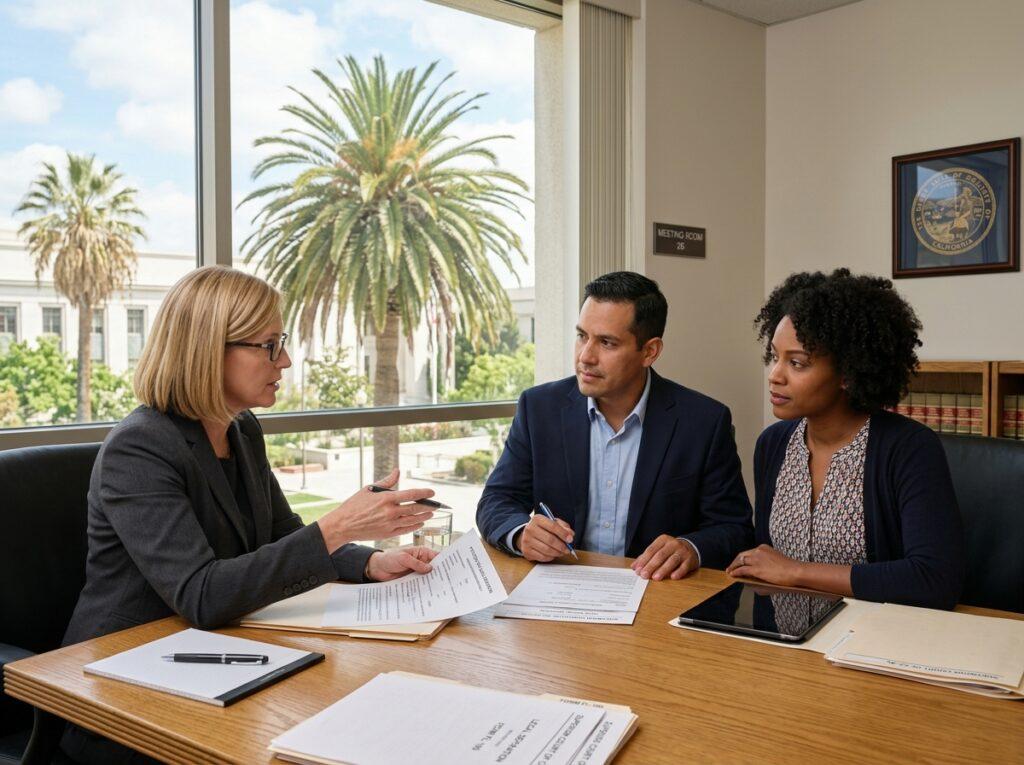
In most counties, when parents don’t agree, they meet with Family Court Services (FCS) for mediation, also referred to as Child Custody Recommending Counseling in many courts. Here, the mediator focuses on your child’s best interests and will ask about routines, communication, safety, and any special needs. Come prepared with a calm, child‑focused proposal and a willingness to compromise where reasonable.
Some counties use “recommending” mediation, which means if you don’t reach a full agreement, the mediator may send a written recommendation to the judge. For this session, keep records of school communications, medical visits, extracurriculars, and exchanges; bring a clean, well‑organized summary rather than a stack of loose papers. If the other parent refuses to cooperate, stay measured – judges can tell who is solving the problems and who is creating them.
If domestic violence is involved, tell the mediator right away. You can ask for separate sessions and additional safety measures. You should document and address your concerns with a child custody lawyer before finalizing any plans.
Domestic Violence, Safety, and Supervised Visitation
If there’s been a domestic violence incident within the past five years, California law requires judges to apply special rules before awarding custody to the abusive parent. In many cases, the safer parent receives sole legal and physical custody, and any visits for the abusive parent may be limited or supervised until the court is satisfied that the child will be protected. Documentation matters: police reports, restraining orders, medical records, and text messages can help the judge understand the situation.
Supervised visitation is a tool, not a punishment, as it allows a relationship to continue while reducing risk. Courts may also order no‑contact provisions, monitored exchanges, or counseling.
If you feel unsafe, say so clearly and propose reasonable protections. You can’t control the other parent’s conduct, but you can demonstrate that your plan keeps the child stable and secure.
How California Courts Handle Relocation in 2025
Relocation cases (or “move‑aways”) are some of the hardest child custody cases. Judges start by looking at what kind of physical custody you have and whether there’s a permanent order. A parent with sole physical custody has more freedom to move, but the court examines whether the move would harm the child.
When parents share joint physical custody, the moving parent must usually show that the move is in the child’s best interests. Either way, the analysis is fact‑specific. Expect the court to consider the distance of the move, the child’s school and community ties, each parent’s involvement, the ability to maintain frequent contact, and the quality of life in each location.
Present a concrete plan: proposed schedule, travel logistics and costs, technology for virtual contact, and how you’ll support the child’s relationship with the other parent. If you oppose the move, focus on stability, the child’s existing routine, and practical alternatives that preserve strong bonds with both parents.
How California Courts Modify and Enforce Custody Orders
Not all custody matters start with a divorce. Unmarried parents can open a standalone custody and support case. If you need initial orders or want to change an existing plan, you’ll need to file the right forms, serve the other parent, attend mediation, and, if necessary, present your case at a hearing.
Accuracy and service deadlines matter. If the other parent doesn’t participate after proper service, the court can still act.
Support and custody influence each other but are decided separately. If your income has changed, or the parenting schedule is different from the order, you may need to ask the court to update the order. A child support lawyer at Pinkham & Associates can help.
Establishing Parentage for Unmarried Parents
Parentage must be established before a court can issue custody orders for unmarried parents. That may be as simple as a Voluntary Declaration of Parentage or, in some cases, DNA testing and a paternity case. If parentage is in dispute, our team can help you prove it.
Practical Steps You Can Take to Strengthen Your Custody Case
Judges value parents who keep children out of conflict and meet their day‑to‑day needs. Keep a shared calendar for school, activities, and medical appointments. Use neutral, businesslike communication, such as email or a parenting app, to help you create a clear record that leads to fewer arguments.
Offer specific solutions, not accusations, and if exchanges are tense, propose a safe, public location or a third‑party hand‑off. Stick to the order, arrive on time, and avoid negative talk about the other parent around your child.
Document what matters without over‑collecting. Save report cards, attendance notes, medical visit summaries, and proof of your involvement (coaching, tutoring, therapy sessions, or transportation). If something urgent changes, like repeated missed exchanges, address it quickly and appropriately – realistic, child‑centered plans carry weight with the court.

California Child Custody FAQ
Here are some questions we receive most often in child custody cases. If you have a question you don’t see answered here, reach out for a free consultation.
Does 50/50 Custody Mean No One Pays Child Support?
Not necessarily. California looks at both parents’ incomes and the actual time shared with the child. Even with equal parenting time, a higher‑earning parent may still pay support so both households can meet the child’s needs.
Can My Teenager Choose Where to Live?
A child’s preference matters more as they mature, but it is one factor among many. Judges consider the reasons behind the preference and whether the choice supports the child’s safety, schooling, and stability.
What if the Other Parent Withholds My Child During My Scheduled Time?
Follow your order, stay calm, and document the missed time. You can request enforcement, make‑up time, or changes to the plan. Judges respond better when you propose measured fixes rather than escalating conflict.
Can We Use Private Mediation Instead of the Court’s Mediator?
Yes. Many families hire a private mediator to work through parenting plans in more depth. If you reach an agreement, it can be submitted to the court to become an enforceable order.
How Do Courts Handle Substance Abuse Concerns?
Courts may order testing, treatment, supervised visitation, or other safeguards to protect the child. Demonstrating a plan for recovery and compliance with orders can help restore time over time.
How Long Does a Typical Custody Case Take to Resolve?
Uncontested cases can wrap up within a few weeks once the paperwork is complete. Contested matters, however, can take months – especially if evaluations or multiple hearings are needed. Using mediation and proposing detailed solutions often shortens the process.
If We Were Never Married, Do We Need a Separate Case for Custody?
If there’s no existing family law case, you can open a stand‑alone custody and support matter. Establishing legal parentage is required before final custody orders are made for unmarried parents.
Work with a California Custody Attorney to Build a Strong Case
When you’re ready to move from information to action, Pinkham & Associates is here to help with strategy, filings, and court appearances. We serve families throughout Southern California with practical, child‑focused representation. If you need help crafting a plan, preparing for mediation, or presenting your case to a judge, contact us today to get started.